Showing posts with label Star Trek. Show all posts

Richard Matheson, 1926 - 2013

0 comments


As giants in the horror and sci-fi genres go, Richard Matheson is a unique case. He's not a familiar name for most media audiences, yet his influence is so pervasive that it's impossible to imagine modern horror and sci-fi pop culture without him.

In the early years of my geekhood, I familiarized myself with both classic and contemporary horror and sci-fi movies and TV shows but Matheson's name never stood out in any obvious way. Unlike horror/sci-fi celebrities such as Stephen King and Steven Spielberg--both of whom have been heavily influenced by Matheson--I rarely saw Matheson's name used to promote his work. It wasn't until I noticed the appearance of his name in the credits of many movies and TV shows that I was able to understand who he was.

Even though he is a well-respected novelist and short story author in his own right, Matheson frequently contributed his talents to film and TV production. He would either adapt his written work into scripts (The Incredible Shrinking Man, The Legend of Hell House), adapt the work of others into scripts (Burn, Witch, Burn, The Devil Rides Out), or create completely original scripts (The Comedy of Terrors, Kolchak: The Night Stalker). Outside of his direct contributions to Hollywood, many of his other stories and novels were adapted by others into movies and for episodes of TV shows such as The Alfred Hitchcock Hour, Twilight Zone, and Night Gallery. Chances are that if you're a fan of any horror/sci-fi movie franchise or TV series within the last 60 years, Matheson probably had something to do with it.

Although he recently passed away, it's still Richard Matheson's world. We horror and sci-fi fans are just living in it.


Star Trek Boldly Goes Where Its Merchandising and Licensing Rights Say It Can Go

0 comments

Star Trek 2.1: The Wrath of CumberKhan


I've been a Star Trek fan for a significant portion of my life-spanning geekhood, although my overall enthusiasm for the franchise has waned considerably during the last decade. It's not that Star Trek is a bad franchise as a whole; I just think that its potential has been squandered time and time again due to the absence of a strong, central leadership figure at the helm to guide the franchise through its various incarnations and effectively capitalize on its successes. As a result of this lack of leadership, Trek has been subject to Paramount's whims, which has largely resulted in competently made yet frequently bland Trek content and products. Whether it was using Trek to prop up a fledgling TV network (as was the case of Voyager and then Enterprise for Paramount's now-defunct UPN) or pushing one of the more successful Trek spinoffs onto the big screen just to makes some extra dollars (the underwhelming and uninspired Next Generation movies), Paramount's decisions concerning Trek appear to be made mostly by its accounting department and no one else.

With that in mind, I've been paying attention to the media coverage of Star Trek Into Darkness, the second movie in Paramount's reboot of the franchise that debuts here in the U.S. this weekend. The reboot started back in 2009 with a movie directed by J.J. Abrams, who has returned to direct the sequel. Most of the coverage of the new movie has been routine promotional stuff: articles reviewing the long history of Trek, fans discussing which Trek iterations were their most and least favorite, interviews with the reboot movie cast, and so on. But with director Abrams recently being hired by Disney to direct the first film in the next Star Wars trilogy, speculation has run rampant about what will become of Trek in the near future and whether Abrams will stay on with Trek or, if he leaves, who will continue the Trek reboot effort when Abrams is gone.

After reading dozens of reviews, articles and discussion boards, I finally found one article that sheds a considerable amount of light on the future of Trek and why Abrams signed on to a rival sci-fi franchise even though his last Trek film was a box office smash and the sequel looks to be equally profitable. Read on to learn more about how this Star Trek reboot might not live long and prosper after all.

According to The Wrap, Abrams' vision for the Trek reboot were much grander than what the fans actually got. This may have led Abrams to abandon ship for Disney, which recently acquired ownership of Star Wars franchise from creator George Lucas. As stated in the article:

"Competing ambitions between Paramount, CBS and Abrams' production company Bad Robot over merchandising surrounding the first film in the rebooted "Star Trek" franchise led the director to curtail plans to turn the series into a multi-platform experience that spanned television, digital entertainment and comic books, according to an individual with knowledge of the dispute. ... "Star Trek's" licensing and merchandising rights are spread over two media conglomerates with competing goals. The rights to the original television series from the 1960s remained with CBS after it split off from Paramount’s corporate parent Viacom in 2006, while the studio retained the rights to the film series. CBS also held onto the ability to create future “Star Trek” TV shows. ... (CBS) was making roughly $20 million a year on that merchandise and had no incentive to play nice with its former corporate brother ... In response, (Bad Robot) scaled back its ambitions to have "Star Trek's" storylines play out with television shows, spin-off films and online components, something Abrams had been eager to accomplish." (Click here to read the full article.)


Q: How much are Kirk and Spock worth?
A: It depends upon which ones you're talking about.


The Wrap concludes that Abrams left Star Trek for Star Wars largely because Disney has much more control over the Star Wars franchise than Paramount does over Trek and is thus more likely to work with Abrams' grand ambitions, and I'm inclined to agree. A major difference between Star Trek and Star Wars is that Trek's creator Gene Roddenberry never had nearly as much control over his creation as Lucas did over his, and I think that this difference is going to work in the favor of Star Wars in the long run. I'm still miffed that Disney discontinued production of the animated Clone Wars series, but it is obviously much more organized than Paramount when it comes to nurturing franchises.

(For another comparative example of Disney's prowess with building franchises, just look at how Marvel is doing under Disney and compare it to how DC is doing under Time-Warner. As of now, Marvel is starting on "Phase Two" of its movie adaptation plan and is set to release two new cartoons and a live-action TV show, while DC is still struggling with what to do with its characters that aren't named Batman.)

With the ongoing conflict of interest between CBS and Paramount and Abrams's frustration over it, I suspect that this particular Trek reboot will sputter to an end within a few years regardless of what Into Darkness does at the box office. I've said it before and I'll say it again: The worst thing that has ever happened to Star Trek was Paramount. That's been true for a long time and the fact that it's still true doesn't bode well for the franchise no matter how loyal its fan base is.


J.J. Abrams, Star Wars, and Super 8

0 comments


There's been so much buzz on the Internet about J.J. Abrams helming of the next Star Wars movie that I suppose it's my geek duty to say something about it. After all, with Star Trek under his belt, Abrams is going to be the first director to add his creative input to two of today's largest sci-fi franchises.

I honestly believe that the strength of the next Star Wars movie lies much more with the script than with how it is directed. In a way, the prequels had it easy: All they had to do was answer and expand upon key questions left over from the original trilogy, such as how Anakin Skywalker became Darth Vader, how Emperor Palpatine rose to power, and what the term "Clone Wars" meant. In contrast, the sequels that take place after the events of Return of the Jedi can go just about anywhere within the enormous Star Wars universe. Rumors have been circulating for years that George Lucas had an idea for three additional Star Wars films after Jedi, but nothing can be verified for sure until more news about Abrams' sequel becomes available.

That said, I do think that Abrams' suitability to direct the next Star Wars movie can be seen in his 2011 film, Super 8. Since the announcement was made, fans and articles have largely been scrutinizing Abrams' Star Trek reboot movie from 2009 to determine how Abrams will fare with his Star Wars movie. That's not entirely inaccurate; in fact, it has been argued that the box office success of Abrams' Trek movie hinged upon him making Trek more like Star Wars anyway. (I happen to agree with that opinion.) Yet Super 8 showed something that I think is even more relevant to long-time Star Wars fans--namely, that Abrams wrote and directed that movie to prove how talented he is at capturing the summer blockbuster aesthetic that was popular at the box office during the late 70s and early 80s, the years of the initial heyday of Star Wars. Read on for some additional thoughts on how this summer season creature features provides hints regarding the future of the Star Wars franchise.

To be sure, Super 8 is Abrams' love letter to Steven Spielberg (which was also produced by Steven Spielberg, no less). Sure, the popularity of the original Star Wars trilogy had a major impact on fantasy and sci-fi filmmaking during the late 70s and early 80s, but it was Spielberg's directorial approach to fantasy and sci-fi filmmaking that shaped the look and feel of other fantasy and sci-fi films from that time and in years since then. Super 8 even references Spielberg's film stock of choice when he was shooting movies when he was a teenager (ergo the film's title) and makes ample usage of one of Spielberg's recurring interests, modern UFO mythology, as part of its story.


Almost every scene in Super 8 is analogous to Spielberg's most popular fantasy, sci-fi and horror movies--particularly Jaws, Close Encounters of the Third Kind, E.T., Poltergeist, and Jurassic Park. The dramatic themes, narrative structure, casting choices, visual style and goofy humor of Super 8 are almost identical to Spielberg's work; even the soundtrack, which was composed Michael Giacchino, sounds remarkably similar to the work of longtime Spielberg collaborator John Williams. For those who have argued that Spielberg should have directed at least one of the Star Wars movies as part of his career, they're in luck--as Super 8 shows, Abrams is capable of being the next best thing to Spielberg when it comes to fantasy and sci-fi filmmaking. Furthermore, Super 8 was a hit at the box office, which showed that Abrams' ability to mimic Spielberg's cinema aesthetic also has cross-generational appeal.

On the other hand, there are problems with Super 8 that could also be present in Abrams' Star Wars movie. The biggest problem would be this: Can Abrams' bring something genuinely unique to the franchise to extend its appeal into a new generation of fans, or will he be too focused on recapturing the look and feel of the original trilogy to offer something other than a repeat of what has come before? I think that Super 8 is a fun movie, but the most remarkable thing about it is how closely it imitates Spielberg's style, not how good the movie is as its own story. In other words, it felt like it was a tribute to Spielberg first and a story second; as such, character development and plot details in the movie felt like they were determined more by how closely they emulated tropes from Spielberg's movies, not by their own narrative logic. Super 8 is a great example of Abrams' talent as a director but I thought that it felt somewhat hollow as I watched it, as if the spark of creativity was snuffed for the sake of creating an accurate and obvious homage to Spielberg's greatest box office hits.


I would like to think that with Abrams' experience with writing, directing and producing such a wide range of titles during his own career, he should be able to use his position as director to bring a new kind of creative energy into the Star Wars saga. It probably also helps that Abrams is not writing the sequel's screenplay--that responsibility has been given to Michael Arndt, who also wrote Little Miss Sunshine and Toy Story 3. However, what Abrams will and will not be allowed to do with his Star Wars sequel ultimately rests with Disney, the franchise's new owner. I'm sure Abrams will give Disney exactly what it wants, but will that be what everyone else wants too?


Star Wars Flashback: Early Star Wars Remote Control Toys and Model Rocket Kits

0 comments


This weekend marks the release of the Wii U, the new Nintendo gaming console. The big selling point for the Wii U is the touch screen control pad, which offers new ways of interacting with video games. With me being a sci-fi fan, hearing about a new kind of video game control scheme immediately leads me to wonder how the new scheme will allow me to better interact with and control the iconic vehicles from my favorite sci-fi franchises when they are ported into a video game environment.

Take Star Wars, for example. The earliest video games that put fans in the seats of Rebel and Imperial star fighters first appeared during the 90s, with titles such as X-Wing and TIE Fighter. (There were also the Star Wars and Empire Strikes Back arcade games in the 80s, but those were more like rail shooters than flight simulators.) Yet even before video games had enough sophistication to create a vehicle simulation fit for a galaxy far, far away, Lucasfilm tried to give fans the experience of controlling a Star Wars vehicle through remote control toys and model rocket kits (with varying degrees of success, of course). Click below to look back at these early attempts to put fans in the seat of their favorite Star Wars vehicles.

Lucasfilm has been consistently licensing remote control Star Wars toys and model rocket kits for almost two decades, ever since the mid-90s. Even now, you can purchase remote control Star Wars vehicles that can also seat action figures. Yet the very first Star Wars vehicle toys with remote controls and jet packs date way back to the 1970s, which is what I'm looking at in this post.

In the area of remote control toys, there was Kenner's "Sonic Controlled" Land Speeder, which was available as an exclusive from J.C. Penney between 1978 and 1980.


The good news about the Sonic Controlled Land Speeder was that you could put Star Wars action figures in it. The bad news is that the sonic control system rarely worked. Such shoddy controls made the toy prone to frequent malfunctions, which would explain why it wasn't widely distributed outside of J.C. Penney Christmas catalogs. So if you wanted a toy that would allow you to portray a young Luke Skywalker going on a drunken bender after chugging too much blue bantha milk and running over a few Stormtroopers, jawas, droids and Mos Eisley aliens with his Land Speeder, you were out of luck.

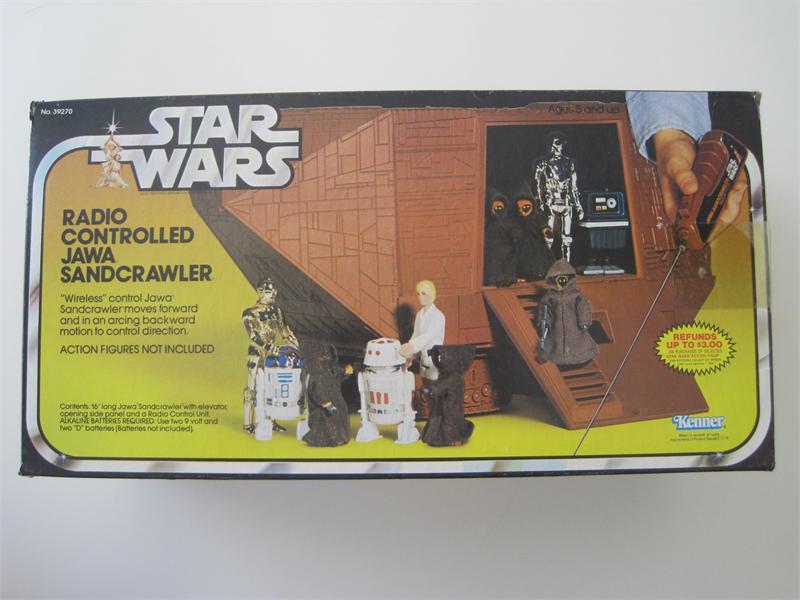
Then there was Kenner's Radio Controlled Jawa Sandcrawler, another J.C. Penney exclusive that appeared in the 1979 and 1980 Christmas catalogs.


From what I've read, the Sandcrawler worked better than the Land Speeder, but not by much. The price tag didn't help either--it was one of the most expensive Star Wars vehicle toys of its time at $30, a rather sizable cost for one of the movie's less popular vehicles. Regardless of its technical issues and price, it was still better than Kenner's other Sandcrawler, the Sandcrawler that was included in the Land of the Jawas playset. While the Remote Control Sandcrawler was made of plastic and could contain action figures, the Land of the Jawas Sandcrawler was a cheap cardboard backdrop that couldn't contain anything.

Kenner may have fumbled in the area of remote control toys, but Estes was able to deliver a few functional Star Wars model rocket kits. Basically, they were just regular model rocket kits in Star Wars drag and you couldn't make them duel each other in a dogfight, but at least they could fly. The two vehicles that Estes released as model rocket kits were the X-Wing Fighter and the TIE Fighter.


Curiously, Estes' TIE Fighter model rocket kit was the only model kit version of the standard TIE Fighter that could be found in the U.S. for the longest time. A TIE Fighter model kit didn't appear on American hobby store shelves until 1995, even though Darth Vader TIE Fighter model kits were sold after the release of Star Wars in 1977 and TIE Interceptor model kits were sold after the release of Return of the Jedi in 1983. Come to think of it, I'm sure that a few hobby enthusiasts bought the kit in the late 70s and early 80s with no intent of launching it just so they could have a TIE Fighter among their Star Wars model collection.

The other vehicles in Star Wars didn't lend themselves well to rocket model kit designs: the Millennium Falcon and Blockade Runner weren't aerodynamic enough, and kits based on the Y-Wing Fighter and the Star Destroyer wouldn't appear until 1995. So what else did Estes release in the 70s? An R2-D2 model rocket kit.


Attack of the Clones would later reveal that astromech droids could have rockets installed in them, but back in the 70s it seemed very odd to have a rocket kit based on a droid and not a vehicle. It was like something an exceptionally cruel droid owner would do to one of his hapless droids: strap a rocket to it and blast it into space. Just looking at the kit's packaging made me think of R2 loudly emitting one of his shrill electronic screams as he's launched into the air.

The R2-D2 rocket kit may have seemed like a stretch, but at least that looked like something from the Star Wars movie. The same could not be said for the Star Wars Photon Torpedo rocket kit.


Even though the Photon Torpedo kit was the most rocket-like and probably flew better than all of the other Star Wars kits, it really felt like Estes was scraping the bottom of the barrel with this one just to get another piece of Star Wars merchandise on the shelves. As you can see from the ad above, the Photon Torpedo kit was marketed as "the missile that destroyed the Imperial Death Star", even though the X-Wings in the movie never launched anything that looked like a missile. (The ad copy sounds like something a huckster would say on the streets of Coruscant to score some money from some unsuspecting dupe: "Why, of course this is the exact same missile that Luke Skywalker used to destroy the Death Star! Why would I lie to you about such an priceless piece of Rebel Alliance history?")

Star Wars wasn't the only sci-fi franchise that sold remote control toys and model rocket kits in the 70s. Battlestar Galactica produced a Colonial Viper model rocket kit and a remote control Cylon Raider (although it didn't fly--it just rolled around like a Roomba--and you couldn't put action figures in it), while Star Trek sold model rocket kits based on the USS Enterprise and a Klingon Battle Cruiser and a battery-powered "Star Trek CSF Controlled Space Flight" toy. Yet Lucasfilm was willing to go the extra mile to put Star Wars fans at the controls of their favorite futuristic vehicles, even if there were a few defects and malfunctions among its earliest attempts. Since that trend continues to this day among many sci-fi franchises, it's clear that such an effort really paid off in the long run for all sci-fi fans.


Nerd Rant: Darth Vader Goes to Disneyland, while Terminator Remains Lost in Time

0 comments


Everyone knows by now that George Lucas has sold Lucasfilm and all of its creative properties, such as the Star Wars and Indiana Jones franchises, to Disney for over $4 billion. This is big news for both Star Wars fans and sci-fi and fantasy fans in general, so I thought that I would contribute a few of my own thoughts as to what this means for the future of Star Wars and sci-fi/fantasy film franchises in general, as well as how it compares to the current status of the floundering Terminator franchise. Read on ...

I'm kind of torn about Lucas selling Star Wars to Disney. It's not much of a surprise that he would do this, since he's worked closely with Disney before on other Star Wars projects. In fact, the last time I visited Disney back in 2007, it was during one of the "Star Wars Celebration" weekends at the park (events that were held to celebrate the 30th anniversary of the first Star Wars) and people were getting their photos taken with actors dressed as various characters from the Star Wars universe. This was before the recent renovation of the Star Tours ride at the Disney parks, a renovation that completed in 2011.


The rationale I've heard Lucas provide in interviews is that Disney will provide a safe environment for the future of his creative properties. I can't argue with that logic, because I think that Star Wars will do better under the ownership of Disney than, say, Star Trek has done under the ownership of Paramount. The same could be said about the relationship between Marvel and Disney in comparison to the relationship between DC Comics and Time Warner; in other words, given its creative roots in fantasy storytelling, Disney will be a safer, more supportive environment for fantasy franchises such as Marvel and Star Wars than a less niche-focused media company such as Paramount or Time Warner.

For example: Two of the four Star Trek spin-offs, Voyager and Enterprise, were put into production for the sake of attracting the Trek fan base to provide a steady supply of ratings for Paramount's fledgling--and later cancelled--United Paramount Network (UPN). This was a revival of Paramount's original plan to launch its own TV network back in the 70s and use a new Trek TV series, Star Trek: Phase II, as the new network's flagship show. That plan fell through and the Phase II pilot script later became the script for Star Trek: The Motion Picture, but that didn't stop Paramount from using the Trek franchise (twice, no less) to help establish and sustain the non-Trek project that was UPN. Given Disney's long-established system of media production and distribution, I doubt that Disney will put the Star Wars franchise into the same kind of awkward and ill-conceived situations.

All that has been determined so far for the immediate future of Star Wars under Disney is that a new trilogy is in the works, the long-rumored Episodes 7, 8 and 9 of the saga. Episode 7 is currently in pre-production and is scheduled for release in 2015, with the sequels following every two or three subsequent years. The Star Wars: 1313 video game is still scheduled for completion and release. As far as I can tell, everything else about the franchise has yet to be determined. I still don't know how many more episodes of The Clone Wars series will be produced and how long it will remain on Cartoon Network, a network that's owned by Time Warner. I suspect that Cartoon Network's recent rescheduling of The Clone Wars from its successful Friday night slot to a Saturday morning slot was probably based on the pending sale of Lucasfilm to Disney--in other words, Cartoon Network's relocation of The Clone Wars to a less successful time slot could be a signal of its near cancellation--but this is only speculation on my part.


Where I feel uncertain about Disney's acquisition of Lucasfilm is in light of how much else Disney owns right now--it's currently the largest media conglomerate in the US--and how much more it will go on to own after the profits from Star Wars are added to its collective revenue. In addition to Lucasfilm, Disney also owns Pixar, Marvel, and The Muppets Studio; the combination of these companies' creative licenses amounts to an enormous piece of pop culture real estate, along with all of the creative licenses that Disney already has by itself. This doesn't even include the other assets that Disney owns, such as ESPN, ABC, Touchstone Pictures and Hyperion Books. Sure, the creative side of the Disney media empire may do wonderful things for the Star Wars franchise, but I'm not very comfortable with the corporate side of the Disney media empire using Star Wars revenue to gobble up even more chunks of domestic and international media--something that is inevitably going to happen, unfortunately. How future sci-fi and fantasy film franchises can achieve success in a media landscape that's dominated by Disney remains to be seen.

Bringing things back to a more geek-centric level, I'm also hoping that Disney's ownership of the Star Wars franchise will not prompt it to abandon its own Tron franchise. The Tron Uprising series is a fantastic show and the franchise as a whole has a lot of potential, so I would hate to see Disney completely ditch their cult fan favorite in exchange for the more well-known and much more lucrative property.


Concerns aside, the transition of Star Wars from Lucas to Disney is a good example of a well-maintained franchise that will see more success under new and proven ownership. Say what you will about what Lucas has done with his franchise since its inception, at least he made sure that there was always someone at the helm to manage the Star Wars universe. The same cannot be said for the Terminator franchise, which is currently struggling to break free of its current state of limbo. For as much as I love the Terminator franchise, I'm still shocked that it has made it as far as it has without a consistent leadership figure such as James Cameron--or anyone else.

As of now, the Terminator franchise is currently owned by Megan Ellison and her production company Annapurna Films, but the rights to the franchise will revert back to Cameron if a new movie is not made by 2018. Some rumors suggest another sequel, while others hint at a complete reboot. Personally, I think that the franchise made its worst mistake when it associated its success with the bankability of Arnold Schwarzenegger, a mistake from which the franchise may never recover.

Terminator 2 was a big hit in 1991 and the most profitable film in the franchise, but I think that most of its success was due to Schwarzenegger's peaking popularity during the late 80s and early 90s. (Then again, T2 is the most positive and optimistic movie in the series, which might also have something to do with its appeal to a larger, blockbuster-sized audience. As film critic Sean French observed, the violence and anti-social nature of The Terminator were sanitized by Cameron himself in T2, essentially transforming the franchise that started as a gritty, violent, grindhouse-style low-budget sci-fi movie into a sleek, high-tech summer blockbuster movie with a then-popular leading actor.) Utilizing Schwarzenegger to produce a successful sequel was a shrewd decision on Cameron's part, since T2 salvaged his own career after The Abyss tanked at the box office in 1989 (without T2, there never would have been True Lies, Dark Angel, Titanic or Avatar), even though this decision would ultimately cripple the Terminator franchise.

T2 led many to regard the Terminator franchise as strictly a Schwarzenegger vehicle, even though his creative input to the movies is negligible and his character was the most disposable one in terms of the franchise's overarching narrative logic. The Schwarzenegger connection was further reinforced by the T2 3-D: Battle Across Time ride in the Universal Studio theme parks--in a story which depicts Schwarzenegger's T-800 character as the triumphant vanquisher of Skynet and recasts humanity's post-nuclear savior, John Connor, in a secondary and superfluous role--and by Terminator 3: Rise of the Machines in 2003. Schwarzenegger appeared in T3 under the direction of Jonathan Mostow, after years of saying that he'd only do another Terminator movie if Cameron directed it. Schwarzenegger hoped that T3 would do for his career what T2 did for Cameron's; it didn't, and I don't think a Terminator 5 would either.

As any devoted Terminator fan knows, there are plenty of Schwarzenegger-free, universe-expanding Terminator stories to be told through the narrative rules established in the movies. For example, the Terminator: Sarah Connor Chronicles TV series explored the Terminator universe in entertaining and character-driven ways that the movies never had time to do, all without involving a cyborg that looked and sounded like an Austrian bodybuilder.


I enjoy Terminator 3 and Terminator Salvation for what they are (as well as the Terminator novels connected to those sequels), but I think that Josh Friedman's involvement in the franchise through his creation of the Sarah Connor Chronicles series was the last real chance to get the franchise back on stable creative ground. This chance was lost between the writer's strike during the show's first season and the Fox network's dwindling support of the series during the second. Alas, the association with a faded campy action star, the lack of behind-the-scenes leadership, shifting ownership of creative rights, and an unstable production schedule and distribution venue for its TV series have all combined to terminate the Terminator's chances of significant continuation into the future.

The Schwarzenegger-Terminator link is inescapable by now, and how his future, post-political film career fares will determine what the Terminator franchise will do next. If the poor sales of his recent tell-all book and his god-awful Governator cartoon series proposal are any indication, Schwarzenegger's blockbuster days are long over and the Terminator franchise will move on without him--that is, if it ever moves again at all.


Top Picks: 2011 Sci-Fi and Superhero Christmas Ornaments

0 comments


With September here, merchandise for the big three holidays--Halloween, Thanksgiving and Christmas--is currently flooding the shelves of stores everywhere. As sure as the leaves change color in the fall, this tidal wave of merchandising also includes geek-pandering Christmas ornaments. Highly-detailed and highly-affordable miniatures are like catnip to me, so here are my recommendations for this year's ornaments. While I couldn't find any ornaments to recommend that would fit into the category of horror, there are plenty of others left in the areas of science fiction and superheroes. Read on ...

I've divided my list into two sections: characters and vehicles. All of the items listed here are Hallmark ornaments. Carlton Cards are still making franchised-based ornaments as well, but the only one that I can recommend from this year's set is their Stargate SG-1 ornament (which depicts Colonel Jack O'Neill fighting off some Replicators) and I can't find a good, non-watermarked picture of this noteworthy collectible to include in this post.


Characters

When it comes to superhero ornaments, Batman and Spider-Man have become annual mainstays with an occasional Superman ornament showing up from time to time. Not much has changed this year--Batman and Spider-Man have their own ornaments yet again--but there are also Green Lantern and Thor ornaments available as well. While I'm sure that these two ornaments are part of the promotional merchandising campaigns for these heroes' first appearances on the big screen last summer, it's nice to see some variety among the kinds of superheroes you can put on your Christmas tree.


One of this year's biggest collector's item is the limited edition Bossk ornament, which debuted in Hallmark stores last July. If the bounty hunters are among your favorite characters in the Star Wars universe, then you should pick this one up--even though it's a limited edition ornament, it's still available at various online stores. Then again, if you already have the Jango Fett and Boba Fett ornaments and were lucky enough to pick up the Dengar and IG-88 ornaments at last summer's Comic Con, then getting a Bossk ornament for your collection is mandatory.


Another must-have for die-hard sci-fi collectors is the new battery-powered Cylon Centurion ornament, which will be released in October. This Centurion is from the original Battlestar Galactica series, and it plays a few Galactica sound clips. If you love robot ornaments, you should probably get this one ASAP--lest it become like the Robby the Robot ornament from 2009, which has since become so rare that it can go from anywhere between $100 to $200.


Vehicles

In keeping with this year's theme of Star Wars bounty hunters, Hallmark has released a battery-powered Slave I ornament that plays lines of dialogue and sound effects from Empire Strikes Back. Hallmark previously released the Slave I in 2002, although that ornament was made out of die-cast metal, it didn't play any sounds, and it featured the vehicle's color scheme from Attack of the Clones.


For Star Trek fans, there's the Romulan Bird of Prey ornament. This ornament is modeled after the Bird of Prey ship as it was first seen in the original Star Trek TV series, and it features glowing warp nacelles.


There's another Tron ornament out this year, and it's another light cycle. Last year, the Tron ornament was modeled after the light cycle driven by Sam Flynn and it glowed blue; this year, the ornament is modeled after CLU's light cycle and it glows yellow. I was hoping that this year's Tron ornament would be a different kind of vehicle (say, a Recognizer or a Light Runner) yet because this is for a franchise that's been largely dormant for almost three decades, I'll take whatever I can get.


Probably the coolest vehicle ornament from this year's selection is the battery-powered Batmobile. This isn't the first Batmobile Christmas ornament--there have been plenty of those before now--but this one is modeled after the Batmobile from the 1960s Batman TV series and it plays 20 seconds of the series' theme song.


Sci-Fi Geekery in American History

0 comments


A few weeks ago, the Mrs. and I took a few friends to the National Mall in Washington DC to look around some of the museums. While each of the museums have their own sci-fi geek-friendly content, I was suprised to see quite a few references to 20th century sci-fi movies and TV shows in the National Museum of American History--both in the main hall and elsewhere. Click below to see a my photo gallery of federally recognized historical nerdity.

The first geeky thing I recognized in the main hall was a complete C-3P0 costume worn by Anthony Daniels in Return of the Jedi. According to the musuem's Web site, they also have an egg prop from Alien, but I couldn't find it on display anywhere in the building.


Another sci-fi artifact that was on display in the main hall was one of the phasers from the original Star Trek TV show. It was included as part of an artifact wall entitled "Lasers: The First 50 Years", which also featured a cover of an issue of Amazing Stories magazine which included chapters from H.G. Wells' War of the Worlds novel.


Star Trek also made an appearance in the "Paper Engineering: Fold, Pull, Pop and Turn" exhibit as one of the pop-up books on display.


There were other interesting odd and ends in the museum, including a Barbie doll, a 12-inch G.I. Joe doll, and an explanation about the difference between the term "doll" and the term "action figure". I'm sure that the term "action figure", not "doll", has been essential in the sale of many, many geek-centric sci-fi toy lines aimed at boys, both prepubescent and otherwise.


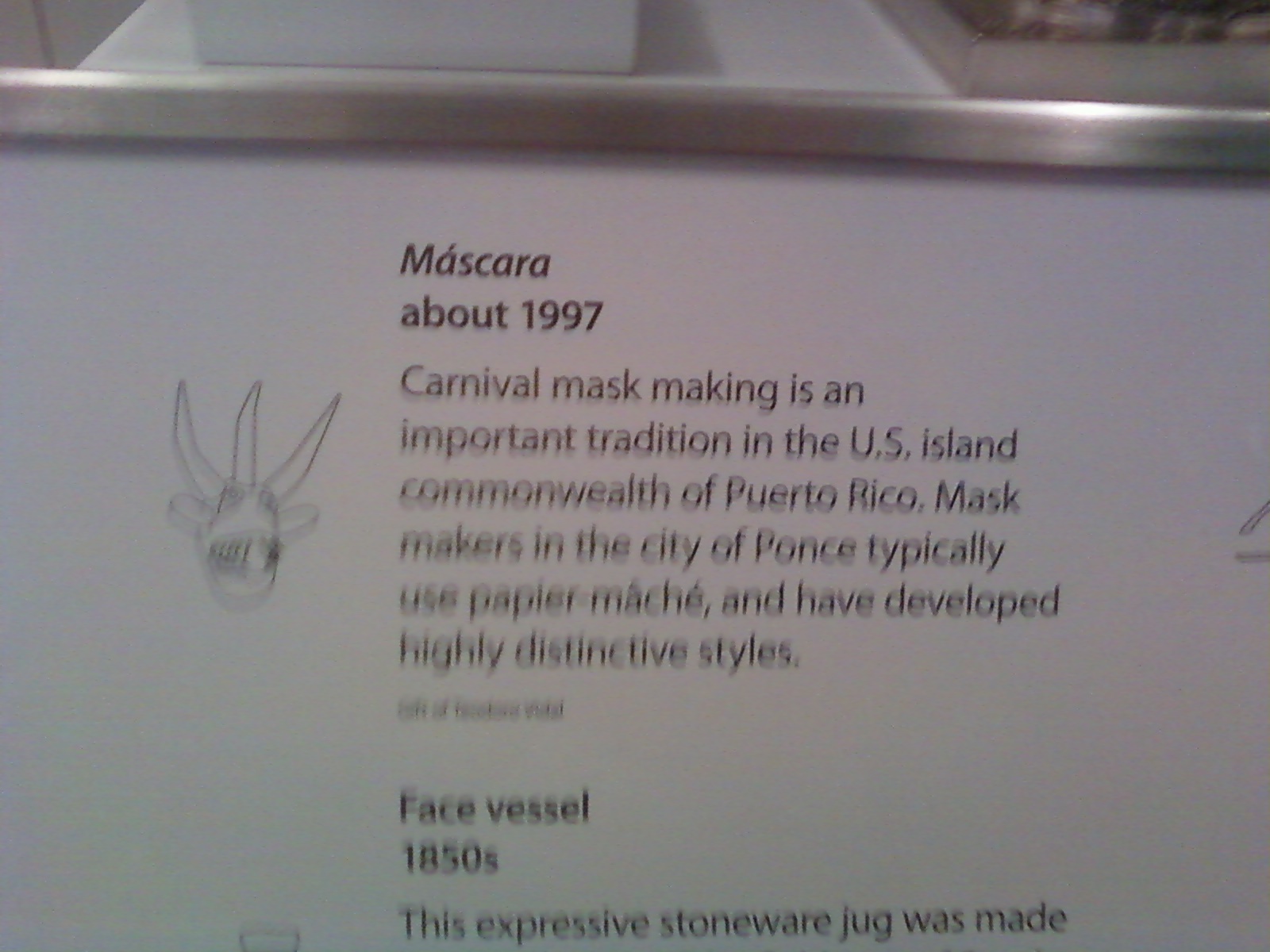
Among the more odd artifacts were a carnival mask from Puerto Rico, and a skeleton letter opener that was featured as part of the "Celluloid: The First Plastic" exhibit wall.


Deca Trek-A-Thon Coming to DC

0 comments


For all of you Washington DC-based Star Trek fans, this is for you. Travel the Galaxy this Summer with Crystal Screen: Star Trek Crystal City BID Arlington, VA. Crystal Screen will be showing all ten Star Trek movies, outdoors and in order, from June to August. Click the link above for more details. Each night will also have special giveaways and other activities, but the big highlight (at least for me) is that the Washington Shakespeare Company will be doing performances in Klingon as part of the movie showings. What's not to love?

Nerd Devotion in Lego

0 comments
For as long as I can remember, I've had a strong admiration (not to mention something of a mild jealousy) of people who have mastered the hobby of miniature sci-fi/horror model making. My skill level only gets me as far as buying an occasional highly-detailed NECA action figure--or, as I would prefer to call them, "highly-detailed, pre-painted, pre-assembled model kits for people who lack the time, money and talent to paint and assemble highly-detailed model kits".

However, I reserve my deepest geek appreciation for those who go the extra mile to design entire model kits from scratch by themselves. Many do it as customized garage kits, some of which are even made available for purchase (either assembled or unassembled) by others. But my post for today focuses on 15-year-old Sven Junga, who has made some eye-popping models of vehicles from Stargate, Star Trek and Star Wars from nothing but Legos. Yep, Legos. I hang my model-assembly-challenged nerd head in shame. Read on . . .

I've posted some pictures of Junga's work below, and you can go to his Flickr site for more Lego-goodness. His attention to detail is phenomenal and if this doesn't leave you wondering why there isn't a Lego-based Stargate video game out there yet, I don't know what will.