Showing posts with label Friday the 13th. Show all posts

Funko and Super 7 Go Retro with New ReAction Action Figures

1 comments


The power of nostalgia strikes again! Back in 2012, toy companies Funko and Super 7 teamed up to finish what Kenner started back in the '70s by producing a line of 3 and 3/4-inch action figures based on the movie Alien. This partnership marked the beginning of the ReAction line of action figures, one that later expanded to include similar-sized action figures based on the Six Million Dollar Man TV series.

I'm guessing that these ReAction figures must have been a success, because that would explain the recent announcement by Funko and Super 7 to produce even more ReAction figures based on characters from Back to the Future, Buffy the Vampire Slayer, Escape From New York, Firefly, Goonies, Nightmare Before Christmas, Predator, Pulp Fiction, The Terminator and other popular films and TV shows from the '80s and '90s. These figures are currently available for pre-order over at Entertainment Earth.

I find it amusing that even after the arrival of highly detailed yet reasonably priced action figures from companies such as McFarlane Toys and NECA, fans and collectors are still willing to spend money on even less detailed action figures that have a design aesthetic similar to Kenner's during the late '70s and early '80s. On the other hand, I have no room to judge--after all, the expanding ReAction line will also include figures based on classic Universal Studios monsters, figures that I'm assuming will appear similar to the 3 and 3/4-inch Universal Studio monster figures that Remco released during the early '80s.


Remco's Universal Monster action figures.


Even though I never collected any of Remco's Universal Monster figures, I eyed them with great curiosity and fascination back in the day when I was just discovering classic monster movies. Remco's line had Dracula, Frankenstein's Monster, the Wolfman, the Mummy, the Phantom of the Opera and the Creature from the Black Lagoon; the ReAction line will have the same set of characters along with the Invisible Man. Thus, while I prefer to collect figures that have greater detail, such as Diamond Select's line of classic monster figures, there's a part of me that wants to spend a chunk of change on ReAction figures so that I can have classic Universal Monsters rub elbows with more contemporary horror icons such as the Alien, Predator, a T-800 endoskeleton, and slashers such as Micheal Meyers and Freddy Krueger.

Check out the ReAction Figures and More blog for updates about additions to the ReAction line of figures.


This Weekend: Blood at the Beach III Convention at Virginia Beach

0 comments


For as much as I love horror, I don't get to nearly as many horror conventions as I'd like, especially ones that have creative, gory-sounding names. Yet if you live in the Virginia Beach area and have some time to kill this weekend, you might want to go to Blood at the Beach III, a horror convention that's being held at the Norfolk Hotel and Conference Center from May 10th to the 12th.

Its bikini-bloodbath name aside, Blood at the Beach III sounds like it will be a fun event with a great selection of guests, including a Friday the 13th Part VII: The New Blood cast reunion. The convention will even have an official "Virginia Beach Zombie Walk" this Friday evening as part of the festivities. Click here to go to the official site, which has more information about Blood at the Beach III.

I also wanted to mention that among the attending vendors will be our own sell-made monster maker Georgette Gaynor, who will be selling her creations at Blood at the Beach III. (Click here, here and here to see examples of her work in previous posts). Her monsters will be selling between $60-$125, many at the low range and with up to $30 less if you don't want to include the monster's base and iron support pole. If you're at the event, feel free to stop by Gaynor's table to say hi.

Blood at the Beach III ... not to be confused with Blood Beach.


Great Moments in Slasher Film History: Bay of Blood (1971)

0 comments


As horror films go, giallo movies are among my favorites. I enjoy the subgenre's weaving of pulp mystery characterizations and plot devices into its tales of blood-soaked terror, an attribute that sets it apart from its American counterpart, the slasher subgenre. Despite their differences, the Italian giallo did inspire the American slasher, particularly in the case of Mario Bava's 1971 movie Bay of Blood (a.k.a. Twitch of the Death Nerve, a.k.a. Reazione a Catena). Critics have credited Bay of Blood as being the giallo movie that most obviously influenced the slasher film craze in the U.S. during the 80s--particularly Friday the 13th Part 2, which copied a few of Bay of Blood's death scenes almost shot for shot.

I just saw Bay of Blood for the first time the other week, and here are some thoughts about this gory gem and unique relationship to slasher films and the giallo subgenre itself. Read on....

The plot of Bay of Blood is simple. An elderly heiress dies under mysterious circumstances within the first few minutes of the film, and the unclaimed inheritance of her valuable bayside forest estate sets off a murder spree among rival family members that comes to a bizarre and unexpected conclusion within the film's final frames.

Bay of Blood may not be one of Bava's best giallo films, but that's largely because it's not meant to be. For as much as it shocked audiences during its initial release, Bava shot this film as a wickedly dark parody of the giallo subgenre itself. Most giallo films depict a single killer (or two) and a main character that spends the duration of the movie deciphering the killer's motive and identity--no matter how convoluted or improbable they might be. In contrast, almost every character in Bava's movie is both a killer and a victim, and the motive is all too clear: greed.

According to one interview in the documentary that was included on the Bay of Blood DVD, Bava made this movie as a frustrated response to fans who kept asking him why he didn't make his horror films as gory as those made by Dario Argento; if this claim is true, it would certainly explain Bava's mix of nihilism and gallows humor in the film's plot and visual tone.

With such an aim to depart from and satirize giallo narrative conventions, it's peculiar that Bay of Blood would earn its place in horror film history as the creative connective tissue between giallo and slasher films. Only a handful of scenes within the movie are directly credited with influencing the slasher subgenre--namely, the scenes where four young adults trespass into the bayside estate to party and have sex, only to be murdered in creatively gruesome ways. Within the plot of the movie, these characters have no direct relation to the feuding family members and are murdered simply because they are in the wrong place at the wrong time. Yet the gory killings, creepy woodland settings and full-frontal nudity in these scenes would go on to inspire The Burning, Just Before Dawn, Madman, Sleepaway Camp and countless other slasher movies.

Two victims united in death in Bay of Blood.

Another oddity that stems from Bay of Blood and its influence is that American slasher films that center on teenagers often feature a somewhat puritanical sense of morality. In these films, the teenage characters who partake in alcohol, drugs and sex will die horribly while the innocent and virginal teenage characters will most likely survive. In contrast, no one is completely innocent in Bay of Blood, and almost everyone is killed regardless of who they are or what they've done. When you consider the identities, motives and reactions of the perpetrators behind the last act of murder in the movie--a punch line of sorts to Bava's feature-length morbid joke--it almost feels like a refutation of the simplistic morality that would populate the slasher subgenre that had yet to exist. (Depending on how you look at it, the only real survivor in Bay of Blood is the titular bay estate itself, an outcome you'll never find in an American slasher movie.)

Bava was a talented filmmaker and the fact that he could make a low-budget film such as Bay of Blood look so impressive is a testament to his skill with the movie camera; thus, it only stands to reason that many of his imitators would lack his finesse and wit. Nevertheless, rarely have I seen such a contrast in themes between a groundbreaking film and the later films it influenced.

Before closing this post, I also want to mention another giallo film that's fit for a comparison to American slasher movies: Andrea Bianchi's Strip Nude for Your Killer (1975). This film is an average entry in the giallo subgenre, but it has all of the earmarks that would be associated with American slasher films: a masked killer, a high body count and--as the title explicitly indicates--ample amounts of nudity. In fact, the movie is structured almost precisely so that the sex and murder happen like clockwork intervals, with a murder followed by a nude scene, followed by another murder and another nude scene, and so on. I would even go so far as to say that Bianchi put more effort into balancing the portions of sex and violence in his movie than into making the killer a frightening presence.


While an American slasher movie would try to infuse the situation depicted in Strip Nude for Your Killer with the aforementioned moral structure, all of the characters in Bianchi's movie are far from innocent. True to giallo's roots in pulp mystery fiction, each character in the film in involved in some kind of vice--be it blackmail, physical abuse or sexual promiscuity. Even the characters that survive the bloodshed and unmask the killer's identity are somewhat sleazy. True, the characters in Strip Nude for Your Killer are all adults while the characters in American slasher movies are frequently teenagers, but the discrepancy between the portrayal of characters based on age between the giallo and slasher subgenres raises an important question: Does this discrepancy mean that 80s-era slashers were made for largely teenagers and if so, does that mean that American filmmakers of that time (both big-budget and low-budget) felt that there wasn't an adult audience for serial murder thrillers in the U.S.? If that is so, does that attitude still apply today, especially in light of recent slasher film remakes?


Epic Fail: A Review of Freddy vs. Jason vs. Ash: The Nightmare Warriors

0 comments


Franchise crossovers are tricky things. They can be a blast when characters from different narrative universes meet in a single setting and share an adventure, or beat the crap out of each other, or beat the crap out of each other and then share an adventure. This stuff isn't high art; it's more of a treat for franchise fans than anything else, which is good news if you're a franchise fan.

However, even fan-friendly stuff like crossovers still have to obey a few rules to be enjoyable stories and not just meandering, clueless cash-ins of popular franchise brand names. For starters, it helps to provide some kind of balance between the franchises that appear in the story, so that both sides have some kind of direct involvement in the story. There's a big difference between a crossover and a guest appearance: Fans of a particular franchise in a crossover will feel cheated if their side doesn't get enough time in the spotlight, and it won't help the crossover narrative achieve a sense of tonal and plot consistency if certain elements just seem forced into the story with little sense of explanation or continuity.

To ensure that narrative balance is achieved, the franchises within the crossover should share some kind of thematic commonality. Dark Horse's original Aliens vs. Predator comic book miniseries worked well because both franchises dealt with killer extraterrestrials, so it didn't require much narrative acrobatics to explain what these two monsters were doing together in the same story. (In contrast, one of the more frustrating aspects of the Alien vs. Predator movie was the "ancient astronaut" subplot that took up so much time but didn't add much to the story, except to provide a convoluted excuse as to why the movie takes place in the arctic.) The same applies to Robocop vs. Terminator: Both franchises revolve around technology that has run amok, so it doesn't take much effort to put them together in the same setting. On the other hand, when two franchises that have nothing in common are forced together into the same story, the results can be ugly. Case in point: The DC Universe/Looney Tunes comic book crossover, two franchises that share no commonality other than that Warner Brothers owns both of them.


This brings me to the focus of this post, my review of Freddy vs. Jason vs. Ash: The Nightmare Warriors. Nightmare Warriors is billed as third part of the Freddy vs. Jason "trilogy", with the first two parts being the Freddy vs. Jason movie and the Freddy vs. Jason vs. Ash comic book miniseries. Read on for my review of Nightmare Warriors, which includes a brief look back at its two predecessors.

When Freddy vs. Jason came out back in 2003, I thought it was a hoot. I enjoyed seeing Robert Englund playing Freddy Krueger one last time, and Ronny Yu's direction featured the right blend of gory horror and violent lunacy. The subplot involving the Westin Hills psychiatric facility and Hypnocil not only made ample use of ideas introduced in previous Nightmare on Elm Street movies, but it also provided an effectively morbid counterweight to the alliance/conflict between Freddy and Jason. Yet the most remarkable thing about this crossover was how long it took to happen at all and when it finally did happen, it was worth the wait. The studios first considered this crossover back in 1987, and it resulted in 18 unused scripts before Freddy vs. Jason was actually made (see the extras on the DVD for more details). Click here for some additional thoughts on Freddy vs. Jason.


The success of Freddy vs. Jason prompted the studios to consider a sequel (naturally), and one of the sequel ideas that quickly bubbled to the surface was to add the character of Ashley "Ash" Williams from the Evil Dead movies to the mix. A treatment for Freddy vs. Jason vs. Ash was drafted, but never produced. So while a sequel to Freddy vs. Jason remains unmade, Wildstorm and Dynamite Entertainment later contacted Jeff Katz, the author of the Freddy vs. Jason vs. Ash treatment, to work with James Kuhoric to rework the treatment into a six-issue comic book miniseries.

I picked up the trade paperback collection of Freddy vs. Jason vs. Ash after it was published in September 2007. It's not as good as Freddy vs. Jason, the artwork by Jason Craig is very uneven, and I doubt that it would've worked as a movie. Nevertheless, Freddy vs. Jason vs. Ash has its share of noteworthy moments for avid fans. It incorporates enough elements from each of the three franchises so that it feels like a complete, coherent story. Perhaps the most intriguing idea in this crossover story was the suggestion that Jason Vorhees' mother used the Necronomicon to bring Jason back from the dead (a plot thread that was hinted at in the ninth Friday the 13th movie), which is how Freddy learns about the cursed book. It's also fun to see Ash's car again, his seemingly indestructible 1973 Oldsmobile Delta 88 Royale--it's the same car that makes cameo appearances in many of Sam Raimi's other films outside of the Evil Dead series.

Katz, Kuhoric and Craig came back in 2009 to do Freddy vs. Jason vs. Ash: The Nightmare Warriors. Nightmare Warriors was originally slated to be a twelve issue miniseries, but it was cut down to six issues. Katz and Kuhoric aimed to tell a much more ambitious story in this sequel, setting it up to serve as a definitive ending to the stories of several surviving characters from the Friday the 13th and Nightmare on Elm Street movies. Unfortunately, while Freddy vs. Jason vs. Ash is an amusing romp, Nightmare Warriors is an ambitious disappointment.

Katz and Kuhoric obviously didn't trim their original idea for a sequel when the miniseries' number of issues was cut from twelve to six. Nightmare Warriors tries to fit too many characters and plot threads into a narrative space that's too small to accommodate them and as a result, it becomes little more than a collage of franchise parts that never really fit together into a whole story. Reading it felt like reading Katz and Kuhoric's Friday the 13th and Nightmare on Elm Street fanboy wish list, not a gleefully gruesome story that horror fans crave. The characters feel interchangeable and its two intersecting plot arcs--the assembly of a support group for Freddy and Jason survivors and the government's interest in the Necronomicon--read like shallow, uninspired excuses to bring the characters together instead of actual plot arcs. As before, Craig's quality of artwork continues to vary from page to page, thus further dulling the story's overall visual impact.

Such narrative overcrowding of Nightmare Warriors leads it to its biggest flaw, at least as crossovers go: a lack of balance between the participating franchises. There are so many characters and ideas from the Friday the 13th and Nightmare on Elm Street franchises that the Evil Dead components of the story--namely Ash, the Necronomicon, and the Deadites--feel like they've been pushed aside and only serve the story in the most perfunctory sense. If anything, such an imbalance calls attention to the fact that the Evil Dead franchise isn't a slasher franchise, thus making Ash's placement in the story that much more awkward. Katz and Kuhoric's plot point that slasher attack survivors have an inner strength that makes them much more capable of beating supernatural villains would've worked perfectly within the Hack/Slash comic book series (say, Freddy vs. Jason vs. Hack/Slash) than with a crossover that involves Evil Dead.


Had Katz and Kuhoric kept their ambitions in check and paid closer attention to what makes crossovers succeed, Nightmare Warriors could have been a great miniseries. Since Nightmare Warriors was intended to be a concluding chapter in a trilogy, it should have been a story that expands directly from Freddy vs. Jason and Freddy vs. Jason vs. Ash instead of returning to two of the original franchises to continue their stories. For example, since she brought Jason back from the dead by using the Necronomicon, Pamela Vorhees could have returned in the third part of the trilogy as some kind of Deadite witch (think of something along the lines of the cellar ghoul from Evil Dead 2) who has a seething grudge against both Freddy and Ash for what they did to her boy in the previous two chapters--imagine the kind of awesome bloodbath that would have been!

In summary, I can't recommend Freddy vs. Jason vs. Ash: The Nightmare Warriors, even to die-hard fans of Freddy, Jason and Ash. Horror buffs are better off satiating their crossover cravings elsewhere.


The X-Files Before The X-Files

0 comments


It's a long-standing tradition within the entertainment industry that when something is a hit--be it a novel, a TV show, or a movie--it should be ripped off repeatedly until it no longer generates a profit. In this post, I'm talking about The X-Files, which was a surprise sci-fi/horror hit for the Fox network back in the 90s. Shortly after it proved to be consistently popular, the other networks (and even Fox itself) tried to ride The X-Files wave of popularity by airing similar shows, shows such as Dark Skies, Prey, Mysterious Ways, Freaky Links, and Special Unit 2.

When asked about where he got his inspiration for The X-Files, show creator Chris Carter would often cite Kolchak: The Night Stalker, which aired on ABC during the 1974-75 season, as his show's direct spiritual predecessor. However, there were quite a few shows that pre-date The X-Files' premiere in 1993 that could have also served as its inspiration (and probably did). These shows featured a duo of some kind--male and female, or believer and skeptic, or both--and their adventures as they explore the strange, the scary and the supernatural on a weekly basis. Read on to learn more about five of these shows, listed according to the number of episodes produced (from lowest number to highest).


1. Title: Something Is Out There

Air Dates: 1988 - 1989

Number of Episodes Produced: A 2 part, 4 hour miniseries, followed by 8 episodes

Basic Premise: A rugged human cop Jack Breslin (Joseph Cortese) and a blond female alien Ta'Ra (Maryam d'Abo) explore the strange, the scary and the supernatural on a weekly basis.

Background: Like Kolchak, Something Is Out There started as a one-shot TV event that was later turned into a weekly TV show. Unlike Kolchak, Something Is Out There lacked a clear creative direction as a series that led to its quick cancellation, the fastest cancellation of all the shows featured on this list.

Something Is Out There was originally a TV miniseries that aired on NBC during May of 1988. It was about an insectoid, parasitic alien that was on a killing spree in Los Angeles, and the good, human-looking alien Ta'Ra and the human cop Breslin who team up to stop the bad alien. In short, Something Is Out There was a rip off of The Hidden, which touches of Alien and the 1982 version of The Thing thrown in for added effect. Nevertheless, what Something Is Out There lacked in comparison to The Hidden (namely, Jack Sholder's creative direction, a witty script by Jim Kouf, and a great cast headlined by Kyle MacLachlan and Michael Nouri), it made up for with some pretty decent kill scenes and an impressive alien parasite design by special effects wizard Rick Baker. As a result, the miniseries was a ratings hit, which prompted NBC to order a full series to be produced for the following TV season.

Unfortunately, with such a quick demand for a TV series and a limited budget to use, the folks behind Something Is Out There had no idea where to go next with its stories and characters. Early episodes featured Ta'Ra and Breslin investigating crimes that were unusual and vaguely supernatural, but that wasn't enough to draw much of a following. Unfortunately, by the time the series revisited the original storyline about aliens invading Earth in the eighth episode, the series was cancelled.

Available on DVD?: No, but you can watch the original miniseries and the 8 episodes on YouTube.

Trivia: Something Is Out There's creator Frank Lupo is no stranger to sci-fi and horror TV. His credits include Painkiller Jane, Werewolf, The Greatest American Hero, and the original Battlestar Galactica. Furthermore, for as derivative as it is of The Hidden, the Something Is Out There miniseries is vastly superior to the straight-to-video sequel The Hidden 2, one of the worst sequels ever made.


2. Title: Shadow Chasers

Air Dates: 1985 - 1986

Number of Episodes Produced: 14 episodes

Basic Premise: A stuffy British anthropology professor Jonathan MacKensie (Trevor Eve) and wisecracking tabloid reporter Edgar "Benny" Benedek (Dennis Dugan) explore the strange, the scary and the supernatural on a weekly basis.

Background: Given its deliberate sense of silliness, it could be argued that Shadow Chasers was produced to cash in on the popularity of Ghostbusters. Whereas X-Files used the conflict between skepticism and faith as a recurring source of character drama, Shadow Chasers used this conflict as the source of cheeky banter and absurd humor. Unfortnately, this show had two things going against it:

1. While ABC may have supported this series to cash in on Ghostbusters' popularity, Shadow Chasers just wasn't Ghostbusters.

2. Horror and sci-fi TV series frequently fail on mainstream network TV here in the U.S., so ABC's early cancellation a sci-fi/horror/comedy hybrid show such as Shadow Chasers was no surprise.

Nevertheless, for a show that didn't take itself too seriously, its episodes featured a pretty impressive roster of monsters such as killer plants, ghosts, zombies, witches, and aliens.

Available on DVD?: No, but you can watch video files of the show on the Shadow Chasers fan site.

Trivia: Believe it or not, this show was co-created by none other than Kenneth Johnson, the producer of memorable sci-fi TV projects such as V, The Incredible Hulk, and the TV version of Alien Nation.


3. Title: She-Wolf of London (a.k.a. Love and Curses)

Air Dates: 1990 - 1991

Number of Episodes Produced: 20 episodes

Basic Premise: A female American student-turned-werewolf Randi Wallace (Kate Hodge) and a male British professor Dr. Ian Matheson (Neil Dickson) explore the strange, the scary and the supernatural on a weekly basis while searching for a cure to end Randi's lycanthropy.

Background: Like Shadow Chasers, She-Wolf of London dealt with monsters and the supernatural in a more lighthearted way--think of a cross between Moonlighting and An American Werewolf in London. This series got off to a promising start, with 14 episodes shot in England. Unfortunately, production complications forced the series to relocate to Los Angeles and assume the new title Love and Curses. The re-titled series only lasted for an additional 6 episodes.

Then again, it probably didn't help that She-Wolf of London was part of the Hollywood Premiere Network, a package of syndicated programming produced by Universal Television that included two other shows. The Hollywood Premiere Network package was picked up by a very small number of syndicated TV channels, which ultimately led to its demise. After its cancellation, episodes of She-Wolf of London were broadcast on the then Sci-Fi Channel in the U.S. and on Sky One in the U.K. Because of this overdue shift in its distribution, She-Wolf of London probably got more viewers and better ratings after its cancellation than during its original broadcast under the Hollywood Premiere Network banner.

Available on DVD?: Yes.

Trivia: She-Wolf of London is also the title of a 1946 horror/mystery movie that, oddly enough, does not feature a werewolf. The series’ creators, Mick Garris and Tom McLoughlin, have done their fair share of horror and sci-fi movie and TV projects: Garris was involved with Masters of Horror, The Fly 2, Critters 2, and various Stephen King adaptations, such as The Stand, Desperation and Riding the Bullet, while McLoughlin contributed his talents to One Dark Night and Friday the 13th (Part VI of the movies and a few episodes of the TV series).
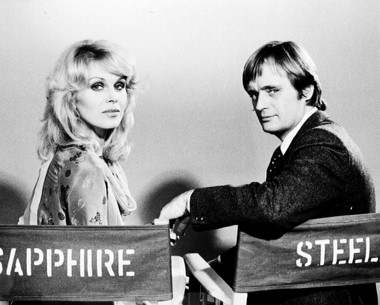


4. Title: Sapphire and Steel

Air Dates: 1979 - 1982

Number of Episodes Produced: 34 TV episodes, 15 audio plays

Basic Premise: Two "interdimensional operatives" Sapphire (first played by Joanna Lumley for TV, then played by Susannah Harker for the audio plays) and Steel (first played by David McCallum, then by David Warner) explore the strange, the scary and the supernatural in multi-episode adventures.

Background: Of all of the series featured on this list, Sapphire and Steel is unmistakably the oddest. Whereas The X-Files often featured situations and beings of extraterrestrial or supernatural origin, Sapphire and Steel featured obtuse stories that focused on time and time travel and many of the strange, abstract phenomena associated with such issues, such as temporal ghosts and pocket universes. It was also the most moody and mysterious series on this list--even more so than The X-Files itself--due in no small part because the title characters are just as enigmatic as the incidents they investigate. If X-Files fans had the question of "When will they?" for Scully and Mulder, then fans had the question of "What are they?" for Sapphire and Steel. Their origins were never specified; they weren't aliens per se, but they certainly weren't human either despite their outward appearances.

Other notable traits of Sapphire and Steel were that the stories take place in a very limited number of locations, and there were little to no special effects used in any of the episodes. This series heavily relied on clever writing, inventive camera work, and performances from the cast when telling its stories, and Sapphire and Steel delivered the goods in spades in each of these areas during the length of its run.

Available on DVD?: Yes.

Trivia: Sapphire and Steel has an amazing pedigree. Its creator P.J. Hammond has contributed his writing talents to shows such as Midsomer Murders, Torchwood, The Bill and Wycliffe. Even though she is largely known for her role in Absolutely Fabulous, Joanna Lumley has been involved in various fantasy, horror and sci-fi titles such as The Satanic Rites of Dracula, The New Avengers, James and the Giant Peach and Corpse Bride. David McCallum is currently on the hit CBS series NCIS and he has appeared in many sci-fi TV series throughout his career, including VR.5, Babylon 5, The Invisible Man, and The Man from U.N.C.L.E.


5. Title: Friday the 13th: The Series

Air Dates: 1987 - 1990

Number of Episodes Produced: 72 episodes

Basic Premise: Cousins Micki Foster (Louise Robey) and Ryan Dallion (John D. LeMay) explore the strange, the scary and the supernatural on a weekly basis as they search to return cursed antiques that were sold at their late uncle's store. (Product recalls can be a bitch, can't they?)

Background: Even though this syndicated series shares some narrative traits with The X-Files, it's more of a precursor to Warehouse 13, since each of the episodes deal with some kind of cursed object that has either has the power to kill or the ability to convince/require its owners to kill. It was also more violent and gory than most hour-long shows of its time.

Of the series on this list, Friday the 13th was the most commercially successful and was able to conjure up three seasons worth of possessed, killer antiques. You can check out this fan site for a complete list of episodes and the evil antiques they featured.

Available on DVD?: Yes.

Trivia: Even though this TV series shared its title with the slasher film series of the same name--they even shared the same producer, Frank Mancuso, Jr.--the commonalities between the two series largely end there. Mancuso has also produced the Species series of movies. One of the episodes, "Faith Healers", was directed by none other than horror legend David Cronenberg.


Write of the Living Dead

0 comments


It's official: I'm now a published author. Centipede Press has published a large book of essays about Night of the Living Dead as part of their "Studies in the Horror Film" series of books and my essay, "Cannibalizing Consumers", is in it. You can read more about the book here.

"Cannibalizing Consumers" was originally part of a series of essays that was included in a 40th anniversary retrospective of Night of the Living Dead on the PopMatters site back in 2008, and it was picked up to be part of the book. If you are so inclined, you can read my original essay here. I'm giddy that my first shot at recognition in an academic publication happens to revolve around the genre-defining film that introduced the world to unstoppable, epidemic, undead cannibalism. Then again, this is isn't just an article publication for me: 1) It's an article published in a series of books about studying horror films, 2) it's an article largely devoted to Night of the Living Dead, and 3) it's an article where I was also able to spend some time discussing Invasion of the Body Snatchers. That's triple nerd score for me!

In case you're interested in reading more of my written works, which are nerd-devotion-thinly-disguised-as-academic-thinking, check out these articles: