Showing posts with label kaiju. Show all posts

Great Moments in Toy Robot History: Shogun Warriors

0 comments


The origins of popular and recurring trends in pop culture can sometimes be difficult to pinpoint, especially trends that have gone on for so long that they become an accepted fixture of everyday life. For this post, I'm talking about Japanese robot toys that are imported and sold in the U.S. I'm sure robot fans who are around my age will remember how Japanese robot toys dominated the shelves of toy stores during the 80s, but the trend of U.S. toy companies securing the rights to sell Japanese robot toys in North America actually began in the 70s with Mattel's Shogun Warriors. While the Shogun Warriors line didn't last long, its influence would impact the toy industry for decades to come. Read on for my retrospective of this trend-setting toy line.

The idea of importing toys from one country and then selling them in another is not a new idea unto itself. However, what made the Shogun Warriors different was that included merchandise from many different points of origin but was sold under a single brand name. Mattel marketed the robot toys as if they all inhabited the same shared universe but they actually originated from over a dozen different Japanese "Super Robot" anime series, series such as Brave Raideen, Gaiking and Voltes V.


To encourage the perception of a unified product line, Mattel gave the licensing rights to Marvel Comics to create a Shogun Warriors comic book series, where the robots coexisted as a single force for good against an evil alien force. There was also a syndicated cartoon series called Force Five that was set up to show five of the anime series upon which the Shogun Warrior toys were based. Unfortunately, the Shogun Warriors line was winding down by the time Force Five made it to the air and only a handful of TV markets carried the series for the brief time that it ran.


Not to limit itself to Super Robot anime, Mattel also secured the rights to Godzilla and Rodan, two monsters from famous Japanese Atomic Age kaiju movies, so that they could be added to the Shogun Warriors line as monsters for the giant robots to fight. As far as I know, Shogun Warriors is the only toy line that has combined Super Robot anime with live-action kaiju films; from that perspective, Guillermo del Toro's Pacific Rim (2013) could also have been named Shogun Warriors: The Movie.


A Godzilla figure from the Shogun Warriors line, complete with 
launching spring-loaded claw and extendable tongue of fire.


Shogun Warrior robots came in three different sizes: 24 inches, 5 inches, and 3.5 inches. Even though the 24-inch robots are what most people remember about the Shogun Warriors line, you could see some items from the robot toys' original anime series in the Shogun Warriors' "Action Vehicle" toys. For example, the Rydoto Action Vehicle was actually from the Brave Raideen anime series and the Kargosaur Action Vehicle was from Gaiking.


Curiously, some of the Shogun Warrior Action Vehicle toys had nothing to do with any Super Robot anime series; they were just toys that Mattel apparently decided to include in the line anyway because they looked similar enough to the robots. After all, none of the anime series upon which the Shogun Warriors toy line was based aired on U.S. television during most of the line's release, so it wasn't as if the kids who were buying the toys would know the difference.


The Shogun Warriors' Heli-Capter Action Vehicle 
(Japanese TV show of origin unknown).


The Shogun Warriors line didn't last long and completely disappeared from toy stores within a few years of its launch. Regardless, its approach to licensing Japanese robot toys in bulk was also used by other toy and model kit lines that were released in the U.S. during the 80s:

* Hasbro's Transformers line was a combination of Takara Tomy's Diaclone and Microman lines, and the Transformers marketing campaign depicted the robots and sentient beings from another planet.

* Matchbox's Voltron line was a combination of robot toys from three anime series: Beast King GoLion, Armored Fleet Dairugger XV and Lightspeed Electroid Albegas. However, when the Voltron cartoon series was assembled to help promote the toy line, footage from Albegas was not included.

* Revell's line of Robotech model kits combined robot kits from three anime series as well: Fang of the Sun Dougram, Super Dimension Fortress Macross and Super Dimension Century Orguss. Yet when the Robotech cartoon was assembled, footage from Dougram and Orguss were not used and Macross was edited together with footage from Super Dimension Cavalry Southern Cross and Genesis Climber MOSPEADA.


One of Revell's Robotech model kits that's originally from 
the Fang of the Sun Dougram anime series.


Over time, the concept of mashing together Super Robot anime series into a single line of merchandise eventually made it back Japan itself with the arrival of Super Robot Wars in 1991. Super Robot Wars is a series of tactical role-playing video games where players can choose from a selection of Super Robots from various anime and manga series. This selection also includes the titular robots from Mazinger Z and Getter Robo, two of the robots that were also featured in the Shogun Warriors toy line. The Super Robot Wars game series continues to this day, and has since expanded to include anime and manga series of its own.

To learn more about the Shogun Warriors, check out the following fan sites:

* Wildtoy's Shogun Warriors Page

* Weird Science-Fantasy's Shogun Warriors Page

* Ted Terranova's Robot Page.


A Shogun Warriors Halloween Costume.


Big 'Bots and Belligerent Behemoths Clash in Pacific Rim (2013)

0 comments

Since I'm planning to wrap up 2013 with a look back at a few examples of Japanese robot toys--one of my favorite kind of toys--I thought I would kick off this year-end series of posts with a review of Guillermo del Toro's Pacific Rim, one of the big-budget releases from last summer that I missed when it was playing in the theaters.


Summer blockbusters have never been held in high regard by the film critic community, and such critics have been particularly displeased with Hollywood's over-usage of CGI effects to produce increasingly bigger and louder blockbuster movies. To be sure, such criticism is not entirely inaccurate: CGI does permit the creation of larger-scale environments and set pieces in ways that miniatures, matte paintings and other practical effect techniques could never allow. As such, CGI has enabled the production of many, many summer blockbusters that are enormous in terms of spectacle but conspicuously short in terms of creative ideas and conceptual depth. Pacific Rim is not one of those movies, because del Toro eagerly packs every frame of his film with enough details and ideas that fans who know what they're looking at will be reviewing this movie for years to come. Pacific Rim is a "big" in every sense of the term--big CGI, big landscapes, big battles, big ideas, and big ambition. In fact, I can't think of how any other special effects technique other than CGI could have accommodated del Toro's story.

In a nutshell, Pacific Rim is about a group of pilots, military leaders, scientists and technicians who build and operate giant robots called "Jaegers" that are designed to fight a seemingly endless series of giant monsters called "Kaiju" that have been emerging out of the Pacific Ocean for years to regularly trash the nearest city. The movie takes places during the closing days of the Kaiju war, when the Jaeger team is planning its final offensive that promises to put an end to the Kaiju menace.

Pacific Rim is a well-made film in every aspect: a well-written script, a well-cast ensemble of actors, and a well-directed approach to the material. Yet to really appreciate this movie, one has to understand that it is a tribute to Japan's "Super Robot" fantasy-science fiction genre and its "Real Robot" spin-off subgenre. Super Robot and Real Robot anime and manga usually involve giant robots that are piloted by human beings to fight giant monsters, other giant robots, or both. The Super Robot genre began in the mid-50s with the manga series Tetsujin 28, and it has continued with popular titles such as Mazinger Z, Mobile Suit Gundam, Patlabor and Neon Genesis Evangelion.

One of Pacific Rim's Super Robots, complete with "Rocket Punch" action.


Pacific Rim also draws inspiration from Japan's kaiju movies (ergo the collective name of the giant monsters in Rim), and the monster designs in the movie demonstrate how much del Toro and his production crew love and understand kaiju films such as Godzilla and Mothra. Nevertheless, most of the film's other details--the characters, their technology, the situations they face and the world they inhabit--are clearly modeled after Super Robot and Real Robot narratives. To put it another way, Pacific Rim is to Super Robot and Real Robot stories as Star Wars is to pulpy sci-fi space operas such as Buck Rogers and Flash Gordon.

With so many details spread throughout the movie, some aspects feel somewhat lacking. In particular, so much detail is applied to movie's fictitious world (a world where there's even a black market for dead Kaiju parts) that the characters feel more like broad personality types than fully-developed individuals. We see bits and pieces of who they are and their roles within the beleaguered, monster-pummeled society they represent but not much more than that; at times, it almost feels like watching Top Gun with giant robots instead of fighter jets. Yet del Toro's enthusiasm for the material permeates every aspect of the film, so I enjoyed geeking out with him just to see what kind of unique interpretations he could put on machines and monsters that are so closely associated with Japanese pop culture. To say that del Toro went above and beyond what he set out to do is an understatement, making this one of his best films to date.

If you don't understand why anyone would want to make a big-budget, live-action film based on anime and manga stories about giant robots, then Pacific Rim probably isn't for you. Otherwise, if you love big brawling 'bots and are looking for an example of CGI done right, then go grab some popcorn and treat yourself to del Toro's magnum mecha opus.


Crayola Encourages Budding Kaiju Fans Through Its Create 2 Destroy Toy Line

0 comments

Imagine this holiday shopping scenario: You're a life-long fan of giant monster movies and want to foster an appreciation of such entertainment in the next generation of geeks--your kids, your nieces and nephews, or both. However, you think that they're too young to grasp the finer points of such giant monster mashes such as Godzilla, Gamera: Guardian of the Universe and Pacific Rim, so you have no idea what to get them for Christmas. Well, never fear because Crayola has got your back this year with its Create 2 Destroy line of playsets.


The Create 2 Destroy playsets aren't strictly kaiju merchandise, but they might as well be because half of the playsets involve giant monsters trashing a city, a shopping mall, and a suburban community. These playsets make up the Dino Destruction sub-series, where kids use Morphix (Crayola's answer to Play-Doh) to mold cars, buildings and trees that the included dinosaurs can stomp with their feet and crush with their jaws. Some of the dinosaurs have spring-loaded tails that kids can use as catapults to launch Morphix-molded boulders into nearby targets.

The other Create 2 Destroy sub-series, Fortress Invasion, are designed to have kids build fortresses, castles and walls with the goal of knocking them down by using the included catapults. While these playsets don't include any monsters, adult fans of King Kong can buy their kids a Dino Destruction playset and a Fortress Invasion playset that so they can imagine dinosaurs tearing through the enormous protective wall on Skull Island. This is the kind of stuff that brings geek families closer together during the holiday season!


NECA Brings Aliens, Robots and Caped Crusaders to Toy Fair 2013

0 comments


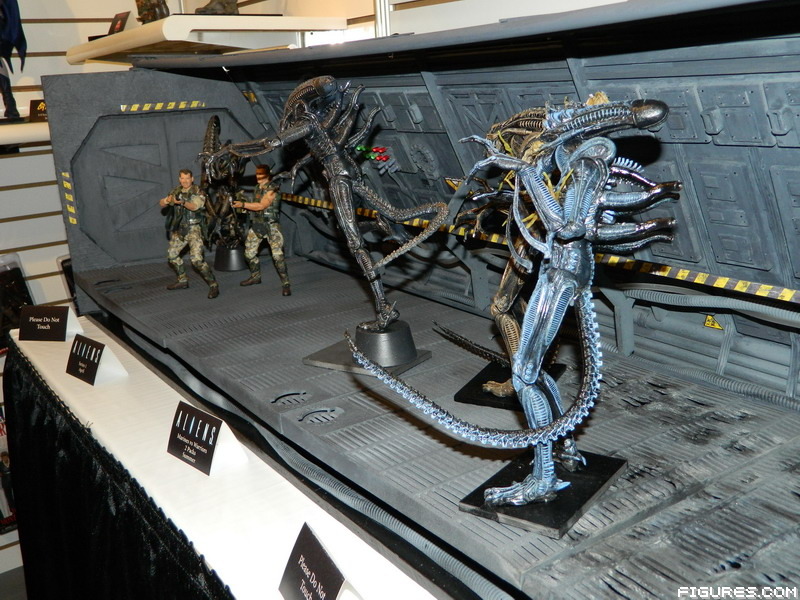
It's February, which means that yet another Toy Fair has come and gone. I've looked through many of the horror and sci-fi offerings that were displayed at this year's event, and I'm glad to say that the National Entertainment Collectibles Association (NECA) keeps bringing the good stuff to the geek masses at affordable prices. Click below for a list of what NECA has in store for horror and sci-fi collectors later this year, complete with pictures courtesy of NECA and Figures.com.

Predator

I don't know exactly how valuable the Predator toy license is but if the 2013 preview items are any indication, this product line must be doing extremely well for NECA. So far, NECA has produced replicas of just about every Predator to appear in the stand-alone movies and the AvP spin-offs, so what could possibly be left? The skull trophy case from Predator 2, that's what. The trophy case includes all of the skulls that were seen in the 1990 sequel, and it's on the same scale as NECA's Predator figures.


NECA will also be releasing series 10 of their Predator figure line. The latest series includes action figures that are based on action figures from Kenner's Predator toy line from the 90s, with some sculpt modifications to make the original designs more movie-accurate.


Aliens

With the eagerly awaited Aliens: Colonial Marines video game arriving this week, some Aliens merchandise will also be appearing on toy store shelves as well. NECA's contributions to the Aliens revival include action figures based on the Colonial Marines characters from Aliens--namely, Hicks and Hudson--and Alien Warriors with varying degrees of battle damage. Whether NECA will continue its Aliens line to include nods to Kenner's Aliens toy line from the 90s remains to be seen.


Robocop

NECA hasn't done much with the Robocop toy license so far, although it deserves kudos for finally giving fans a Robocop figure with a movie-accurate spring-loaded pistol holder built into the figure's right thigh. As an encore to that accomplishment, NECA will be releasing an ED-209 figure this summer.


Pacific Rim

Speaking of robots, Robocop isn't the only mech-centric license in NECA's portfolio. NECA has also picked up the toy license for Pacific Rim, Guillermo del Toro's kaiju-vs.-giant-robots epic that will hit movie theaters later this year. So far, NECA's Pacific Rim line includes three robots from the movie: Gypsy Danger, Crimson Typhoon and Striker Eureka.


Batman

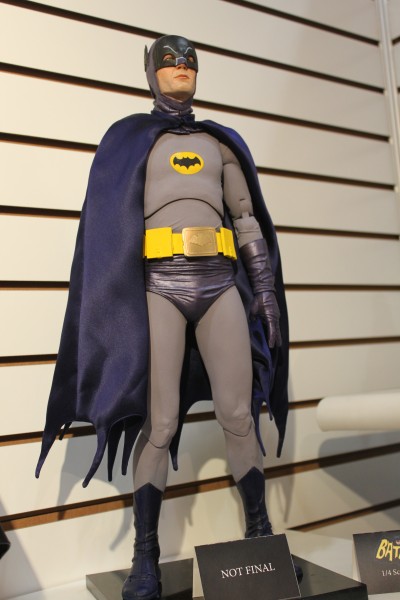
Like many other toy companies, NECA has eagerly jumped on the superhero bandwagon in the search of blockbuster profits. Upcoming NECA figures include versions of Captain America and Iron Man that are based on the latest live-action films; however, when it comes to Batman, NECA has decided to go retro with Batman figures based on the Adam West and Michael Keaton versions of the classic DC superhero.


NECA isn't the only company to look to the past for future superhero toys. Mattel plans to release a full series of action figures and vehicles based on the 1966 live-action Batman TV series.


Giant Insects Reign Supreme in Wii's Escape from Bug Island

0 comments


I'm a big fan of "big bug" movies, so it would seem obvious that I would pick up a copy of a survival horror video game called Escape from Bug Island for my Nintendo Wii, right? Well ... not necessarily. When the game first appeared in the U.S. back in 2007, it was panned by most video game reviewers. Yet with this game's drop below the $10 price point, I recently decided to give this game a chance anyway to see if the critics were right. Speaking as a big bug movie fan, they weren't.

I can think of several survival horror video games for the Wii that have better graphics, better level designs, and better stories. Even Wii's other bug-centric game, 2009's Deadly Creatures, has better production values. Yet where Escape from Bug Island really delivers is where it delivers the most: It's got plenty of big, icky, human-eating bugs ... and that is AWESOME! Read on for my complete review.

In Escape from Bug Island, you play as Ray, a university freshman who reluctantly accompanies Michelle (Ray's secret crush) and Mike (Ray's best friend) to Beelzebub Island, an isolated location that's perpetually shrouded in a thick fog, so that Michelle can study the island's insect population. After Michelle and Mike wander off from the characters' camp site, Ray goes after them and encounters the island's many monstrous residents while searching for his lost friends.


Bug Island is a basic game as survival horror titles go. The graphics lack polish and the music cues are few in selection. The game's story is simple--there aren't many characters, and there are no puzzles to solve or secret codes to remember. Even the game's time travel subplot, which has you playing some of the levels again with new weapons and unlocked areas, doesn't complicate the overall story or game play. That said, the game's dialog is written in a hokey style that openly pokes fun at the game's b-movie premise. (Case in point: one of your weapons is a can of bug spray.) Bug Island isn't the same over-the-top exercise in camp as Zombies Ate My Neighbors! or Stubbs The Zombie, but its attitude of self-mockery is impossible to miss.

The game is played mostly from a third-person perspective, with occasional shifts to a first-person perspective depending on the weapon(s) you are using. Your weapon inventory grows from simple blunt objects (a stick, a baseball bat and rocks) to more sophisticated means of self-defense (knives, swords and guns) as the game progresses, and each level consists of maze-like forests, swamps, caves and ancient ruins that you have to traverse from beginning to end. Even though controlling Ray's walking and running motions through the Wii nunchuk is somewhat clunky at times (he doesn't handle sharp turns very well), controlling the weapons through the Wiimote is both accurate and intuitive.

A giant centipede feeding frenzy.

As the game's title suggests, Bug Island provides an ample supply of bugs for you to avoid, squash, beat, shoot and/or kill. The bugs range in size from a foot long to human height to car-sized, as well as various points in between. They include centipedes, flies, cockroaches, spiders, crickets, praying mantises, moths and maggots. (Curiously, spiders are the only arachnids in the game--over-sized scorpions, ticks and mites are nowhere to be found on the island.) These bugs crawl on you, jump at you, fly into your face, stab at you with their claws and cut you with their sharp mandibles. They buzz, screech and make other noises that one would expect to be made by really big bugs. The only normal-sized insects are the ones that fly together in large swarms that will eat you alive in a matter of seconds if you attract their attention. Fighting off this menagerie of creepy critters will inevitably make your skin crawl, so much so that anyone who has entomophobia and/or arachnophobia should avoid this game.

If the big bugs aren't enough, Bug Island provides plenty of other monsters as well, including sharp-toothed flying fish, bear trap-like carnivorous plants, giant frogs, and King Kong-sized apes with exposed brains and glowing red eyes. There's also a selection of human-animal hybrids such as lizard women, dog-like creatures with human faces, and a delightfully disgusting human-insect hybrid that has a steady stream of maggots dripping from its abdomen.


Indeed, Bug Island has enough monsters to rival any Resident Evil game, and the scares they produce are intensified by the game's use of ambient noises and pervasive application of fog. In a practical sense, the fog hides some of the game's graphic shortcomings, but it also leaves you guessing time and time again as to what will crawl, jump or fly towards you next.

If you're a creature feature junkie like me, then Escape from Bug Island is the game for you. It's the worst camping trip that you'll love to play.


The Age of Feature-Length 3D Horror and Sci-Fi Cartoons in America Has Arrived

0 comments

Feature-length cartoons have been around in American cinema since Disney released Snow White and The Seven Dwarfs back in 1937, but cartoons for genres outside of fairy tale-based musicals have been very rare for most of the time since that milestone. Thus, I've been ecstatic that three horror-themed cartoons--ParaNorman, Hotel Transylvania and Frankenweenie--are being released in American theaters between August and October of this year. Furthermore, all three of them are in 3D and two of them were shot using stop-motion animation, a special effects technique that has almost completely vanished from live-action films.

To be sure, these titles aren't horror cartoons per se--they are mostly comedies with plot points and imagery based on the horror genre. Yet having three of these films debuting in American theaters within weeks of each other is unprecedented and I think that it reflects what 3D and CGI technology can contribute to cinema animation in terms of the kinds of subject matter that animators can explore. I've already posted about how 3D technology has found a home in video games and feature-length CGI cartoons; here, I'll examine how 3D and CGI have sparked new life into animated storytelling, which has resulted in a selection of horror and sci-fi themed cartoons (five of which I will discuss in this post) that will pave the way for new generations of horror and sci-fi fans. In a time where live-action horror and sci-fi films that are released on the big screen have been overrun with remakes, reboots and retreads, this can only be a good thing. Read on ...

For the longest time, the only horror-themed cartoon movie around was Mad Monster Party, which was produced by Rankin/Bass Productions back in 1967, yet that stop-motion cult classic was a rarity even among certain groups of horror fans. I first saw it on syndicated TV when I was just a wee lad during the late 70s (the film was followed by a broadcast of Son of The Blob, which scared the crap out of me before I was old enough to know better). I didn't know the name of the cartoon movie when I first saw it but I remembered enough of Mad Monster Party's visual style and plot that I could tell my friends about it in the years and decades to come, even though none of them had the slightest idea of what I talking about other than to remark that they had no idea that the makers of such holiday favorites as Rudolph, the Red-Nosed Reindeer and Frosty the Snowman would produce something so monster-centric. Tim Burton would eventually make his own contribution to horror-themed cartoon movies with A Nightmare Before Christmas in 1993, but that still left only two animated titles that dealt with horror themes and visuals amid a long list of American cartoons that didn't.


Things have been picking up for horror and sci-fi cartoon movies in the years since thanks to CGI and 3D technology, even to the point of getting Nightmare Before Christmas re-released in 3D in 2006. Sure, these films aren't as serious as the horror and sci-fi cartoons produced in Japan (then again, what other country is more serious about animation than Japan?), but the fact that American animation companies are willing to expand their subject matter into horror and sci-fi territory is a step in the right direction that is long overdue. In chronological order, here are five examples of 3D horror and sci-fi cartoon movies done right, the models that future 3D animators should follow when blazing new paths of their own.


Monster House (2006)


When Monster House arrived in 2006, I was amazed. It was produced using top-notch CGI, it was in 3D, it had a great voice cast, and it was an obvious homage to the many kid- and early teen-friendly horror/sci-fi/adventure films of the 80s, films such as Gremlins, Goonies, The Gate, Explorers, The Monster Squad and Honey, I Shrunk The Kids. (Then again, with executive producers such as Steven Spielberg and Robert Zemeckis, two filmmakers who excelled at these kinds of movies during their heyday, what else would you expect?) Even though Monster House is told from a kid's perspective and is largely devoid of violence and gore, it still tells as a satisfying ghost story that can be enjoyed by an audience of varying ages. If you're looking to introduce kids to the horror movies, Monster House should place high on your list of titles.


Meet The Robinsons (2007)


Meet The Robinsons has everything: A goofy sense of humor, an intriguing story that is both a parody and a homage to the plot device of time travel, a tribute to Walt Disney's futurism, and a heartwarming message about family, belonging and making peace with an uncertain past to move onward into a brighter, better future. In particular, retro sci-fi fans will love the movie's chrome-plated, tail-finned vision of the future that's skillfully rendered in 3D.


Coraline (2009)


2009 was a fantastic year for horror/sci-fi 3D cartoon movies, beginning with Coraline. Henry Selick applied his animation magic to an adaptation of Neil Gaiman's dark, twisted fairy tale, and the results were astonishing. Not too shabby for the first stop-motion animated feature to be shot entirely in 3D. Also, even though Coraline is not a CGI-animated film, it could not have been animated without computers: The characters' different facial expressions were molded by a 3D printing computer program, which allowed for up to 207,336 possible face combinations for a single character.


Monsters Vs. Aliens (2009)


There are so many nods to Atomic Age horror and sci-fi movies in this cartoon that it's impossible for a creature feature fan like me to resist it. It features homages to such classics and cult favorites such as Attack of the 50 Foot Woman, The Blob, Creature from the Black Lagoon, The Fly and Mothra, and it casts Stephen Colbert himself as the President of the United States--what's not to love? Monsters vs. Aliens is also the first computer animated movie to be directly produced in a stereoscopic 3D format, instead of being converted into 3D after completion.


Cloudy with a Chance of Meatballs (2009)


Whenever filmmakers decide to take a short children's book and adapt it into a feature-lenght movie, they really need to look at Cloudy with a Chance of Meatballs as the example to follow. Not only was this film able to take the book's original idea and expand upon it in a way that could sustain a full movie, but doing so also allowed the filmmakers to do a hilarious parody of the science-running-amok plot that has become a cliche in horror and sci-fi movies. Furthermore, Cloudy's 3D effects are amazing, and this level of quality carries over into the 3D Blu-ray version of the movie.


Pissed at The Mist (2007)

0 comments


Good monster movies are hard to come by, let alone good monster movies that were released in theaters. In the case of The Mist, the 2007 adaptation of a Stephen King novella that was released in theaters nationwide, we get a monster movie that is well made and has a lot of potential. The central premise about an invasion from another dimension is intriguing, the cast is solid, and the scriptwriting and direction by King adaptation vet Frank Darabont keeps the plot moving at a steady pace. Unfortunately, the story itself never comes together, largely because it’s nothing more than an assemblage of familiar King character types and situations taken from other, better monster movies. Read on for my complete review.

The Mist is about a group of people who are trapped in a supermarket by a mysterious mist that appears to consume anyone who dares to venture into it. As the monstrous inhabitants of the mist slowly reveal themselves through a series of brief encounters both inside and outside of the supermarket, tensions violently escalate between rival factions of the human survivors.

The best part about The Mist is its large menagerie of monsters, both great and small. Their appearances are infrequent, but these creatures handily steal the show from the human characters. If you love movie monsters such as big bugs or dinosaurs--or even bug-like dinosaurs or dinosaur-like bugs--then you might want to give this film a chance just to see what these beasts look like. (In fact, while I was watching The Mist, I kept wondering what this film would've looked like if it were shot in the 50s and classic creature creator Ray Harryhausen had been tasked with doing the monster designs and effects.)


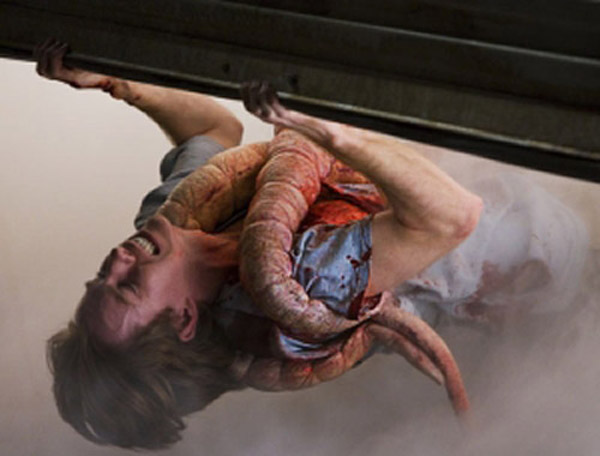
That said, the greatest strength of The Mist is also its biggest drawback. For as deadly and fearsome as the monsters are, they only attack whenever the script requires them to attack and only retreat whenever the script requires them to retreat. They are extremely capable of tearing the supermarket asunder and feasting on all of the people trapped within yet they never do, and it’s never made clear what attracts them and what repels them. Likewise, the mist that enshrouds the creatures is only as thick as the script needs it to be. Some people get lost in the mist and quickly become monster chow, while other people are capable of driving through the mist without colliding with other obstacles or getting stepped on by one of the larger creatures. Such inconsistencies drain the suspense out of the narrative, and I couldn't escape the nagging feeling that I've seen all of this done before and better elsewhere in Aliens, The Birds, Jurassic Park, Cloverfield, and George Romero's zombie movies. Given that the creatures' designs are much more inspired than the situations in which they are placed, they probably would’ve been better utilized in a survival horror video game based on The Mist instead of a direct adaption of the original story.

I've never been a Stephen King fan but I’m familiar enough with his work to recognize the character types that he frequently uses. Many of them are here in The Mist: the reluctant, brave and bland male hero; the outspoken yet ultimately doomed skeptic; the witty and well-spoken elderly sage; the sleazy and self-righteous antagonist; and the easily duped denizens of small town America who fall under the sway of the antagonist. These character types can be found in other horror stories but with King they usually follow the same dramatic trajectories, which makes the interpersonal conflicts inside of the supermarket feel contrived and they do not correspond with the external threats that lurk in the mist. By relying on formulaic character types and conflicts, King--and by extension Darabont--chose to play it safe in an otherwise apocalyptic scenario, and the story that begins with such promise ultimately sputters its way to the end. The film’s final few minutes tries to muster up one last, shocking twist, but the scenes immediately leading up the end are so bereft of momentum that it feels empty and undeserved.


I can only recommend The Mist to die-hard King fans, although some of them might think that this movie is just an abbreviated version of The Stand. Monster movie fans are better off with superior titles such as Alien Raiders, Infestation and Splinter, each of which I wrote about in a previous post here.


Kaiju Anatomy 101 (UPDATED)

0 comments

I don't know who'd have a scalpel big enough to look inside of these guys, but here are two full-color anatomical paintings of Godzilla and Hedorah (a.k.a. The Smog Monster).


I found these over at the Monster Brains blog, although the original artist has yet to be identified. I'm guessing that King Ghidorah probably stepped on him before he could sign his work.

Update, 10/7/11: I just found some additional anatomical drawings of kaiju over at the Pink Tentacle site. This set includes another drawing of Godzilla, as well as pictures of Anguirus, Gamera, and Mothra larva.


Campy, Kooky Commercials Worth Watching: Dwayne vs. The Giant Robot

0 comments

Apparently, somebody doesn't like Dwayne.


This commercial, which is titled "State of Chaos", relishes in kaiju humor, particularly with two of its 'victims' nonchalantly commenting on what the rampaging giant robot is doing to Dwayne's property--and finally Dwayne. Such humor suggests that the writer of this commercial took a page out of artist John Brosio's playbook when creating this ad for State Farm. If that is so, then I think that the folks at State Farm do not understand the Paul Verhoeven-esque satire that results from applying the style of someone like Brosio to an advertisement for an insurance company.

Man, that robot does not like OCP executives.

For more rampaging robot fun, go to State Farm's Chaos in Your Town site. (Trust me, it’s worth the visit.) You can also learn more about the commercial's production here and here.